My bathroom ceiling light is bright but the mirror area is still dark – why?
A bright bathroom ceiling light can make the room feel well lit while leaving your face in shadow at the basin. It’s a common complaint in rented homes and owner-occupied bathrooms alike: the ceiling appears bright, but shaving, applying make-up or cleaning the sink is awkward.
The reason is usually simple. A ceiling light illuminates the room from above, while your head and body can block light from reaching your face. The answer is not necessarily a brighter bulb. In many bathrooms, the most effective improvement is better-positioned task lighting around the mirror.
This guide explains why you may have poor mirror lighting, what to check before choosing an upgrade, and how to decide whether a refresh is enough or the bathroom needs a full renovation. For landlords, the aim is straightforward: improve everyday usability without turning a manageable job into weeks of disruption and unexpected plumbing or tiling costs.
Why a bright ceiling light can leave a shadow at the basin
Ceiling lights are useful for general illumination. They help people move safely around the bathroom and make the whole room easier to clean. But light coming from directly above is not always good for detailed tasks at the mirror.

When you stand at the basin, your head can cast a shadow at the basin and across your face. This is especially noticeable when the only light source is a central ceiling fitting or a downlight positioned behind you. A high-output bulb may brighten the floor, walls and bath, yet do little to reduce the shadows around your eyes and chin.
Other factors can make the problem worse:
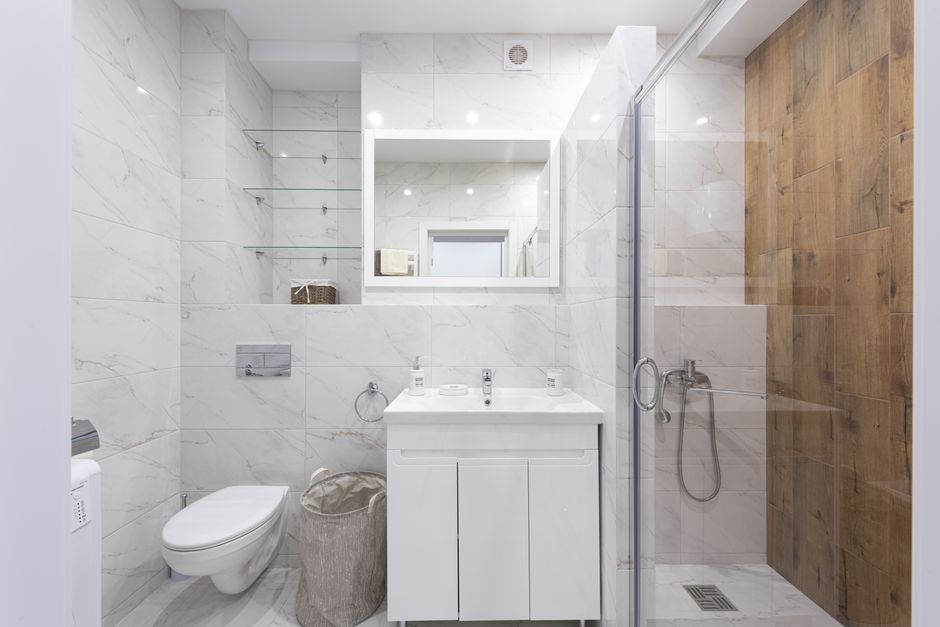
- The light is in the wrong position. A fitting behind the person at the mirror can create stronger facial shadows.
- The mirror is too small or poorly placed. You may have to lean or turn to use it comfortably.
- The light colour is unhelpful. Very warm or very cool light can make skin tones look different from how they appear in daylight.
- Surfaces absorb rather than reflect light. Dark tiles, paint or accessories can make a small room feel dimmer.
- The fitting is dirty or ageing. Dust, residue and a tired lamp can reduce useful light even if it still switches on.
- Glare is being mistaken for brightness. A visible bright bulb can be uncomfortable without providing even illumination at the mirror.
Before changing anything, check whether the light is clean, working correctly and suitable for the bathroom location. If it flickers, overheats or shows signs of damage, arrange for a qualified electrician to inspect it rather than treating it as a simple bulb problem.
What good task lighting in a bathroom looks like
Good task lighting in a bathroom puts useful, even light where the what is a bathroom refresh task happens: at the mirror and basin. In practical terms, that usually means lighting close to face height or integrated into the mirror, rather than relying on a single source above the room.
A well-chosen illuminated mirror can spread light across the face and reduce the sharp shadows created by overhead lighting alone. It can also make a bathroom feel more considered without changing the room’s layout. That is why mirror lighting is often the highest-impact upgrade in a refresh: it improves a daily-use area, is visually noticeable and may avoid the cost and disruption of moving fixtures.
When comparing options, look at more than the headline brightness. Check the light output, colour temperature, light distribution, mirror dimensions and whether the product is suitable for its intended bathroom location. The right choice depends on the room and the people using it; a product that looks impressive in a showroom is not automatically the best fit above a particular basin.
Choose the mirror before changing the layout
Measure the available wall space, basin width and distance to nearby fittings before ordering. A mirror that is too narrow may leave the face poorly covered, while an oversized one can conflict with shelves, taps or a shower screen. If you are considering an illuminated mirror, check its power requirements and how the cable will be connected.
LED Mirror World is a product supplier to consider when comparing illuminated mirror options. Its mirror size calculator page can help with early sizing decisions. Treat any calculator as a planning aid: confirm the actual product dimensions and installation requirements before purchasing.
Use a paper template to check the mirror position
It is easy to underestimate how a mirror will look and feel once it is on the wall. A simple paper template can help you check the size and position before drilling or ordering. This is especially useful in a rental, where avoidable holes, tile damage or a badly placed fitting can create extra work at handover.
- Confirm the product dimensions. Use the actual width and height from the product information, not a rough estimate.
- Cut a paper template. Join sheets of paper or use cardboard to reproduce the mirror’s outline.
- Mark the proposed position. Use removable tape to hold the template on the wall, taking care not to damage the finish.
- Check it from the basin. Stand where the user will normally stand. Confirm that the mirror works for different heights and that the face is comfortably visible.
- Check surrounding items. Look for conflicts with taps, shelves, cabinets, lights, sockets and shower doors. Allow for the fitting method and any required access.
- Review before drilling. Check the wall type and ask the installer to confirm that it is safe to fix the mirror there.
The paper template method is a low-cost way to catch proportion and placement problems early. It cannot confirm what is behind the wall, however. The installer still needs to check fixings, cables, pipework and the product’s electrical requirements.
Refresh or full renovation: how to decide
Poor mirror lighting does not automatically mean the bathroom needs a full refurbishment. Start by identifying what is actually wrong. If the bathroom is sound, clean and functional, a focused refresh may solve the main usability problem with far less cost and disruption.
Consider a refresh when… Consider a full renovation when… The layout works and the basin is in the right place. The layout creates persistent access or usability problems. The main issue is poor mirror lighting, dated accessories or tired finishes. There are recurring leaks, significant damage or several failing fixtures. Tiles, plumbing and ventilation are in serviceable condition. Water damage, mould or inadequate ventilation needs wider investigation and repair. A mirror, lighting or small decoration change could make the room work better. Multiple systems need replacing and a piecemeal approach would be inefficient.For a refresh, a sensible scope might include a suitable illuminated mirror, a minor electrical adjustment, a new seal or a small number of cosmetic repairs. A full renovation may be justified if there are underlying defects or the existing bathroom cannot meet residents’ needs. The key is to base the decision on condition and function, not simply on the age of the décor.
Keep the layout to avoid scope creep
When the basin, bath or shower already works well, keeping it in place can prevent a lighting improvement from becoming a much larger job. Moving a basin may involve altering water and waste pipes, making good walls and floors, changing tiles and coordinating additional trades. In older properties, opening up the room can also reveal defects that were not part of the original budget.
That does not mean layout changes are never worthwhile. They may be necessary to address poor access, persistent water damage or an impractical arrangement. But if the brief is simply “the mirror area is too dark,” start with the lighting problem and avoid adding plumbing or tile work without a clear reason.
For landlords and property managers, a defined scope also makes pricing and scheduling easier. Ask contractors to separate essential repairs from optional improvements, and confirm what is included in the quote: electrical work, making good, disposal, product supply and any decorating. A clear brief reduces the risk of a small job expanding because assumptions were left unstated.
Put tenant usability first
A bathroom is used every day, often at busy times when people need to get ready quickly. A mirror and basin that are awkward to use can have a bigger impact on a tenant’s routine than a decorative feature elsewhere in the room. Prioritise even, comfortable light, a mirror at a practical height, accessible controls and enough space to use the basin without obstruction.
It is also worth checking whether the proposed solution works for the actual occupants. A mirror placed for one person may be too high or too low for another. Where a property is shared, consider whether the lighting is straightforward to operate and whether the room remains usable while work is completed. If possible, schedule disruptive work with tenants in advance and explain when water or electricity may need to be isolated.
Any electrical work in a bathroom should be planned with the room’s conditions and the applicable requirements in mind. Use a suitably qualified electrician to assess the location, installation and connection. Do not assume that an existing light point can safely support a different fitting without checking.
A practical order of work
For a straightforward lighting-led refresh, this sequence can help keep the job controlled:
- Inspect the current problem. Note when the shadow appears, the position of the ceiling light and whether any fittings are faulty.
- Measure the basin wall. Record the usable width and height, and check for obstacles or nearby services.
- Select the mirror and lighting. Compare dimensions, output, light colour, installation method and suitability for the bathroom location.
- Use a paper template. Confirm the proposed mirror position from the user’s normal standing place.
- Get electrical advice before ordering or fitting. Confirm whether the product can be connected at the intended location and what work is needed.
- Protect the existing bathroom. Agree how tiles, the basin and surrounding surfaces will be protected during installation.
- Test the result in use. Check face illumination at the basin, glare, switching and any practical issues before signing off.
Try the lighting at the times it will actually be used, including early morning or evening. A fitting can look effective in daylight but feel different with the rest of the bathroom lights on. If the room still feels harsh or uneven, ask the installer to review positioning and light distribution rather than immediately adding more brightness.
Planning improvements and managing budgets
For landlords comparing options across a portfolio, it can help to separate essential maintenance from upgrades that improve presentation or usability. PropertyData publishes property-related resources that may be useful when researching housing and investment decisions; it is a research resource, not a substitute for inspecting the bathroom or obtaining trade advice. Sponsored content note: this article is sponsored and includes a reference to PropertyData.
Whatever the source of your research, base the decision on the property’s condition, tenant needs and the likely scope of work. A targeted improvement to mirror lighting can be better value than renewing a functioning bathroom simply because its style is no longer current.
The takeaway
If your bathroom ceiling light is bright but the mirror area remains dark, the issue is probably the direction and distribution of light rather than a lack of overall brightness. Overhead lighting can leave a shadow at the basin, especially when the person standing at the mirror blocks the light.
Start with the simplest useful fix: improve task lighting around the mirror. Measure carefully, use a paper template to test the position, and get qualified advice on the electrical installation. If the layout and bathroom are otherwise sound, a focused refresh is often enough. Keeping the basin and plumbing where they are can prevent unnecessary tile work, disruption and scope creep—while making the mirror area much more comfortable for the people who use it every day.